The Collaborative on Global Children’s Issues is bringing together research and cross-sector dialogue to document 35 years of U.S. leadership against child labor and forced labor and strategize on how to sustain global progress.
For over three decades, U.S. leadership played a leading role in the global effort to combat child labor and forced labor, building a framework that transformed the issue from a poorly documented humanitarian concern into a central matter of labor policy and supply chain accountability, contributing to a reduction in global child labor from 246 million children in 2000 to 138 million in 2024. Today, however, progress has slowed and remains uneven across agriculture, informal economies, and conflict-affected settings, while sharp contractions in technical assistance, public data systems, and coordination have left stronger trade enforcement operating alongside diminished prevention capacity.
Child labor is both a humanitarian and a development challenge. It can deprive children of education, expose them to hazardous conditions, undermine their physical and cognitive development, and limit their future economic opportunities. At the societal level, child labor weakens human capital formation, perpetuates poverty, and constrains long-term economic growth, making its reduction not only a matter of protecting children's rights but also of advancing broader development objectives. Effective solutions require rigorous evidence, renewed coordination, and approaches that address root causes rather than merely displacing exploitation.
In collaboration with partners, the collaborative is working to:
- Document the historical record of U.S. leadership across legislation, trade enforcement, data systems, and technical assistance to preserve institutional knowledge and identify what works and what is at risk.
- Draw actionable lessons and recommendations from more than three decades of U.S. engagement to guide future policy and programming.
- Bring together key actors, including researchers, advocates, implementing partners, and current and former policymakers, to identify priorities for the path ahead.
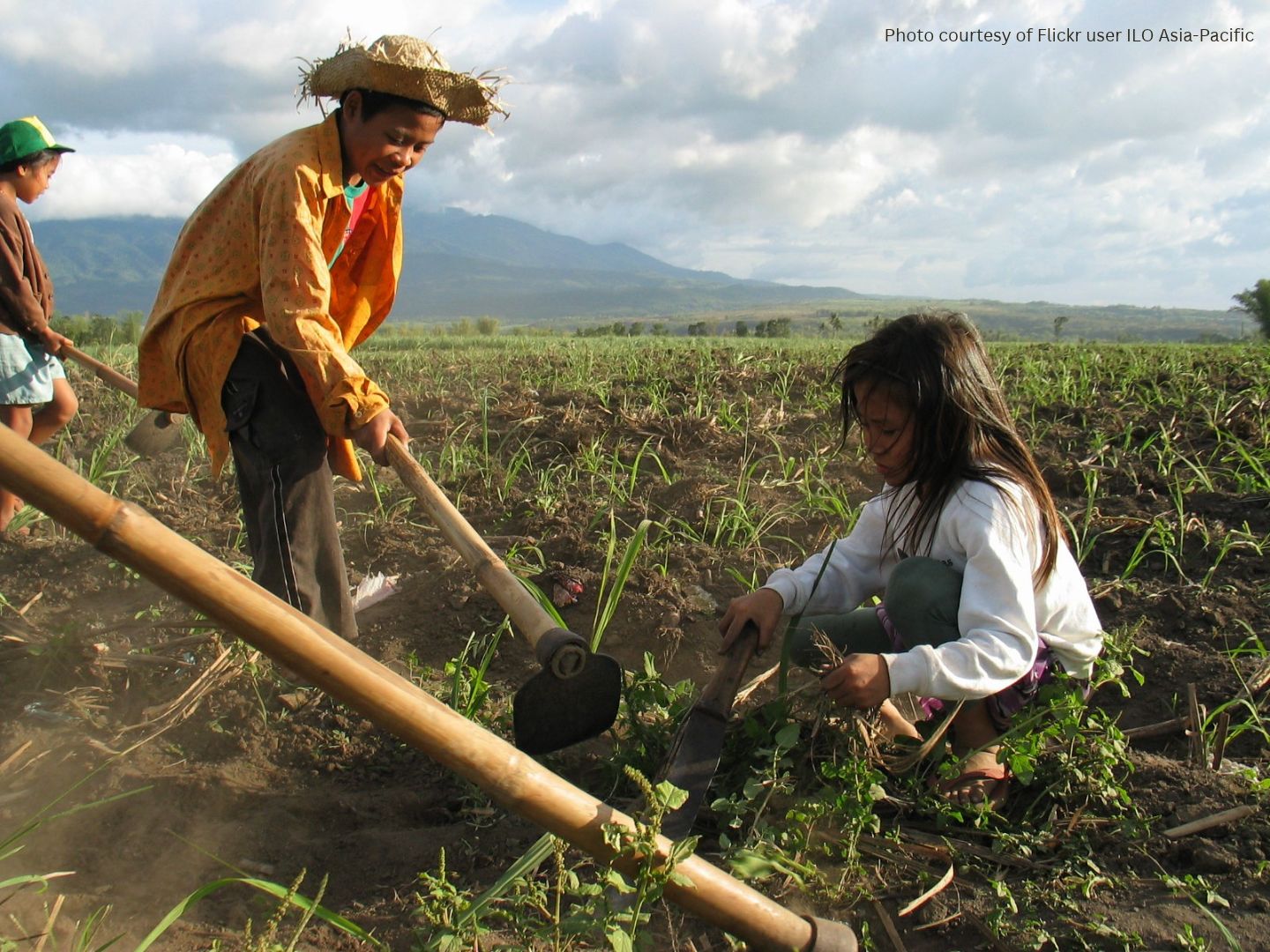
Photo courtesy of Flickr user ILO Asia-Pacific